Two Stone Lighter and Never Set Foot in a Gym: My Year on England's Footpaths
Photo: Collins, Tudor Washington, 1898-1970, photographer, CC BY 4.0, via Wikimedia Commons
Let me be upfront: I have never enjoyed exercise. School PE put me off for life, gym memberships have repeatedly cost me £30 a month to feel judged, and Joe Wicks lasted exactly four days in our house.
So when I tell you I've lost two stone in a year, I want to be equally upfront about how: I went for a walk. Most days. That's it.
How It Started (With a Lost Car Key, Actually)
It began last spring when I couldn't find my car keys and, rather than drive to the post office, I stomped off on foot in a huff. Our village has a public footpath that cuts behind the church and along the river — a route I'd lived near for eleven years and walked precisely never.
Twenty minutes later I came home feeling oddly... good. Not endorphins-and-leggings good. Just calm. The next day I walked it again.
By autumn I'd done the whole network around us: the bridleway over the hill, the towpath into the next town, the field paths that link three villages and a pub I now consider a service station.
Why Walking Works When Everything Else Doesn't
Here's what nobody tells you about incidental movement: it doesn't feel like exercise, so your brain doesn't fight it. There's no kit to buy, no class to be late for, no mirror-walled room where you're the least fit person present.
And the numbers quietly add up. A brisk 45-minute walk burns roughly 200–250 calories. Do that five or six days a week and you're looking at 1,200+ calories a week — before you've changed a single thing on your plate.
My favourite mileage-to-muffin maths, for honesty's sake:
- 30 minutes walking ≈ one custard cream (about 70 calories)
- 1 hour walking ≈ one slice of toast with butter
- A 5-mile Saturday ramble ≈ a Costa latte and a slice of banana bread
I'm not saying walk to 'earn' food — but it helped me realise that a 20-minute wanders' worth of biscuits wasn't worth the trade.
Where to Walk: A Beginner's Guide to Britain's Hidden Network
We have over 140,000 miles of public rights of way in England and Wales, and most of us use a fraction of them. A few starting points:
- Canal towpaths — flat, traffic-free and never more than a mile from a lock to lean on. The Kennet & Avon, the Rochdale and the Grand Union are all brilliantly walkable in short chunks.
- Local footpaths and bridleways — check the Ordnance Survey app or your county council's right of way maps. There's almost always one within ten minutes of your front door.
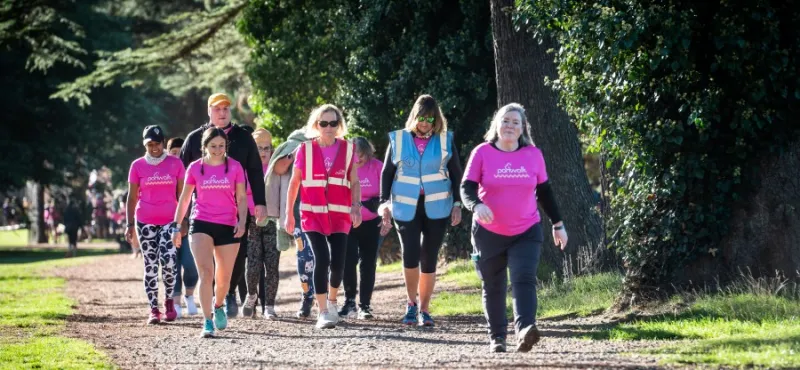
- Parkrun — not just for runners. Walk the 5k, chat to strangers, collect a barcode. It's the friendliest hour of my Saturday now.
- Coastal paths — the England Coast Path is opening up stretch by stretch. Whitby's cliff tops and the Windsor Great Park loops couldn't be more different and both are glorious.
Walking Through British Weather (Yes, Really)
The habit nearly died in November. What saved it:
- Proper socks. Wet feet are the real enemy, not rain. Merino blend, every time.
- A ten-minute rule. On foul days, I'm only committed to ten minutes. I've aborted maybe three walks all year.
- A podcast reserved only for walking. I don't listen to it any other time, which is suspiciously effective motivation.
The Results, One Year On
Two stone down, resting heart rate down, sleep dramatically up. But the change I didn't expect? I know my own county now. I know which field has the bull, which stile wobbles, where the bluebells come out. No gym has ever given me that.
If you hate exercise, stop trying to love it. Lace up, find the footpath behind your own church, and let the weight come off while you're looking at something else entirely.