Scooters, Satchels and Secret Steps: How the School Run Became My Unlikely Personal Trainer
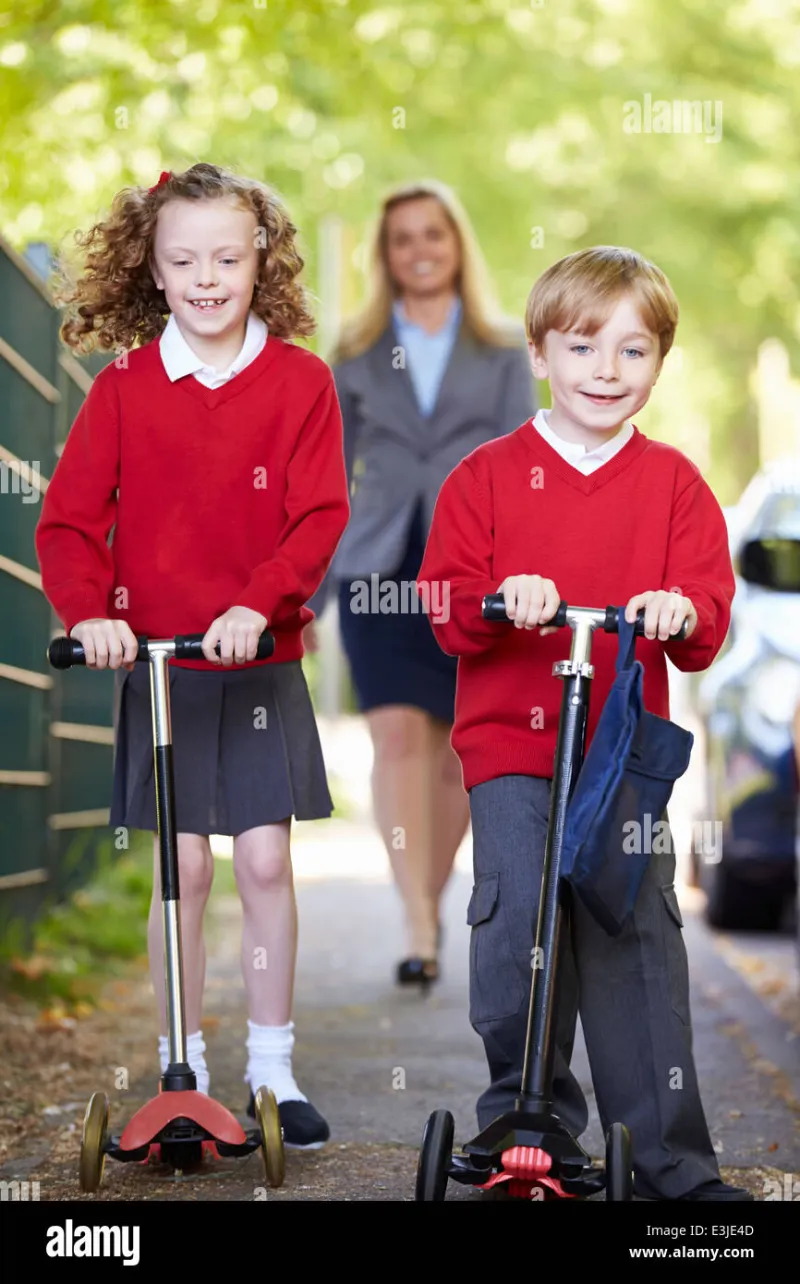
Photo: mum walking children to school UK morning street scooters, via c8.alamy.com
Let's be honest about the school run. It's not exactly a wellness retreat. It's a high-stakes operation involving one missing shoe, a PE kit that's been in the wash since half term, and a 8:47am departure that somehow always becomes 8:52am.
But here's the thing nobody tells you: that twice-daily trek might quietly be doing more for your fitness than the gym card gathering dust in your purse. Done with a bit of intention, the school run is a genuine workout — one you've already scheduled, five days a week, with built-in accountability in the form of a small person who will absolutely not let you skip it.
The Numbers You're Already Clocking
A brisk 15-minute walk to school and back, twice a day, adds up fast. At a proper pace — think 'late for the gates' rather than 'window shopping' — you're looking at roughly 60-80 calories per round trip, depending on your pace and how hilly your patch of Britain is.
Over a school week, that's around 600-800 calories of movement you were doing anyway. Over a term? We're talking the equivalent of several decent-sized roast dinners, quietly cancelled out before you've lifted a dumbbell.
And the steps? A typical walk-and-return sits around 2,500-3,500 steps. Two runs a day and you're halfway to the magic 10,000 before lunch, which is more than most office workers manage by Friday.
Five Ways to Upgrade the Daily Dash
1. Park like you mean it. If you drive, park ten minutes' walk away rather than in the chaos outside the gates. That's 40 extra minutes of walking a day, roughly 150-200 additional calories, and you'll dodge the worst of the school-gate traffic jam. Win, win, win.
2. Embrace the scooter. If your child scoots, don't stroll behind at a crawl — power-walk alongside. Chasing a seven-year-old on a Micro Scooter is genuinely interval training. Short bursts, recoveries, repeat. Nike would charge you for this.
3. Add a hill or a loop. Take the long way once or twice a week. A route with even a gentle incline bumps the calorie burn by 20-30% and gives your legs something to complain about.
4. Carry smart. A loaded rucksack worn on both shoulders (not the one-shoulder handbag swing) turns a walk into weighted cardio. Lunch bags, water bottles and a violin case count as resistance training. Sort of.
5. Time it properly. Leave five minutes earlier than feels comfortable. That small buffer is the difference between a leisurely amble and the brisk pace that actually gets your heart rate up. Brisk means you can talk but not sing — a useful test, even if your only conversation is 'have you got your book bag?'
The December Problem
Now, the awkward bit: it's easy to be a school-run athlete in June. It's considerably harder on a grey Tuesday in February when it's been raining since October and the buggy wheel has a squeak.
A few survival tactics:
- Invest in proper waterproofs. A decent coat and waterproof shoes remove 80% of your excuses. You don't need hiking gear for a 12-minute walk, but you do need to not be soggy by 9am.
- Agree a family rule. 'We walk unless it's properly tipping down' works better than 'we walk if I feel like it', because feelings are unreliable and children are not.
- Think of the fresh air as the workout's bonus, not the point. Studies keep telling us that morning daylight and movement do wonders for mood and energy — the calorie burn is almost a side effect.
Why Incidental Exercise Actually Sticks
The reason the school run works when the gym doesn't is beautifully simple: it's non-negotiable. There's no motivation required. Nobody wakes up at 8:30am wondering whether they can be bothered to get the kids to school — the decision's made, so the movement happens automatically.
Exercise scientists call this 'active travel', and the research is consistently positive: people who build movement into their daily routines keep it up far longer than gym-goers, because habits tied to obligations don't depend on willpower.
So the next time you're standing at the gates, hair damp, one shoe squeaking, feeling vaguely guilty about the untouched gym membership — take stock. You've just done a brisk walk, twice, in the rain, carrying a PE kit. That's not nothing. That's a routine.
And unlike spin class, this one ends with the school bell.